


• Edit my profile
  • View my profile


  • DE
  • FR
  • EN
  • Portrait
    Anerkanntes Studium
    Organisation
    Reglemente
    Karriere
    Alumni
    Internationalisierung
    Nachhaltigkeit
    Netzwerk
    Medien
    Antrittsvorlesungen
    Kontakt
    Fakultät Psychologie
    Fakultät Recht
    Fakultät Geschichte
    Fakultät Wirtschaft
    Fakultät Mathematik und Informatik
  • Fernstudium
    Zulassung und Einschreibung
    Infoveranstaltungen
    Stimmen zum Fernstudium
    Alle Studiengänge
    Bachelor
    Master
    Psychologie
    Recht
    Geschichte
    Wirtschaft
    Mathematik und Informatik
  • Weiterbildung der FernUni Schweiz
    Weiterbildungsangebote
    Infoveranstaltungen
    Psychologie
    Recht
    Geschichte
    Wirtschaft
  • Forschung der FernUni Schweiz
    DORA-Erklärung
    Ethik
    Studienteilnehmende
    Forscherinnen und Forscher
    Publikationen
    Forschungsprojekte
    Konferenzen und wissenschaftliche Veranstaltungen
    Psychologie
    Recht
    Geschichte
    Wirtschaft
    Mathematik und Informatik
    E-Learning
  • Unsere Dienstleistungen
    Anlässe
    Unternehmen
    KinderUni
    Ferienkurse für Kinder und Jugendliche
    Uni60+
  • DE
  • FR
  • EN
  • Studieninteressierte/r
  • Studierende/r
  • Alumni
  • Teil eines Lehrteams
  • Mitarbeitende
  • Medienschaffende
Psychologie Recht Geschichte Wirtschaft Math. und Informatik
  • Studieninteressierte/r
  • Studierende/r
  • Alumni
  • Teil eines Lehrteams
  • Mitarbeitende
  • Medienschaffende
  • Über uns
    Psychologie Recht Geschichte Wirtschaft Mathematik und Informatik
    Portrait Anerkanntes Studium Organisation Reglemente Karriere Alumni Internationalisierung Nachhaltigkeit Netzwerk Medien Antrittsvorlesungen Kontakt
  • Studium
    Psychologie Recht Geschichte Wirtschaft Mathematik und Informatik
    Fernstudium Zulassung und Einschreibung Infoveranstaltungen Stimmen zum Fernstudium Alle Studiengänge Bachelor Master
  • Weiterbildung
    Weiterbildung der FernUni Schweiz Weiterbildungsangebote Infoveranstaltungen
  • Forschung
    Psychologie Recht Geschichte Wirtschaft Mathematik und Informatik E-Learning
    Forschung der FernUni Schweiz DORA-Erklärung Ethik Studienteilnehmende Forscherinnen und Forscher Publikationen Forschungsprojekte Konferenzen und wissenschaftliche Veranstaltungen
  • Dienstleistungen
    Unsere Dienstleistungen Anlässe Unternehmen KinderUni Ferienkurse für Kinder und Jugendliche Uni60+
  • Intranet
    View my profile Edit my profile
  • DE
  • FR
  • EN

Prof. Dr. Matthias Maalouli-Hartmann

  1. FernUni Schweiz
  2. Fakultät Psychologie
Matthias Maalouli-Hartmann
Ausserordentlicher Professor

Dokumente

Lebenslauf Publikationen

Links

E-Mail Google Scholar Experimental cognitive psychology Group

Prof. Dr. Matthias Maalouli-Hartmann promovierte 2013 am Institut für Psychologie der Universität Bern. Anschliessend arbeitete er als Forschungsstipendiant des Schweizerischen Nationalfonds (SNF) in der «Potsdam Embodied Cognition Group» (Universität Potsdam, Deutschland). 2016 kehrte er an die Universität Bern zurück, wo er sich mittels eines «SNF-Ambizione-Stipendiums» mit diversen Aspekten der Zahlenverarbeitung beschäftigte. Seit 2017 ist er an der FernUni Schweiz tätig, unterrichtet drei Module im deutschsprachigen Bachelor- und ein Modul im deutschsprachigen Master-Studiengang in Psychologie und führt diverse Forschungsprojekte im Bereich der experimentellen Kognitionspsychologie durch.

Aktuelles

Eine sich langweilende Frau vor einem LapTop sitzend.

Gedanken beeinflussen unsere Gefühle und unser Verhalten

Unsere Gedanken haben grosse Macht über unsere Gefühle, unser Befinden und Handeln. Sie beeinflussen, wie wir die Dinge um uns herum…

Gedanken beeinflussen unsere Gefühle und unser Verhalten

Portrait Prof. Dr. Matthias Maalouli-Hartmann

Akzeptanz und Befolgung der COVID-19 Präventionsmassnahmen – eine psychologische Betrachtung

Aus psychologischer Sicht ist es interessant, wie unterschiedlich Personen auf die COVID-19 Präventionsmassnahmen reagieren: Während…

Akzeptanz und Befolgung der COVID-19 Präventionsmassnahmen – eine psychologische Betrachtung

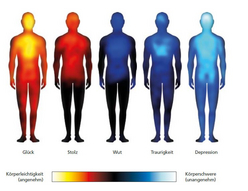
Messung von Emotionen mit «Körperempfindungskarten» Bodily sensation maps

Die Messung von Emotionen stellt eine grosse Herausforderung in der Psychologie dar. Die gängigen Messinstrumente basieren auf…

Messung von Emotionen mit «Körperempfindungskarten» Bodily sensation maps

Publikationen

Publications in peer-reviewed scientific journals

1.     Stocker, K., Hartmann, M., … & Liechti, M. E. (2025). The 3D-ASCr scale: A revalidation of the core dimensions of the Altered States of Consciousness Rating Scale 5D(11)-ASC for psychedelic research. Journal of Psychopharmacology,online first.

2.     Hartmann, M., Dumureau, M. (2025). Anodal high-definition transcranial direct current stimulation over the left (but not right) parietal cortex facilitates mental arithmetic. Journal of Cognitive Enhancement, 9, 51-66.

3.     Stocker, K., Hartmann, M., Ley, L., Becker, A. M., Holze, F., & Liechti, M. E. (2024). The revival of the psychedelic experience scale: Revealing its extended-mystical, visual, and distressing experiential spectrum with LSD and psilocybin studies. Journal of Psychopharmacology, 38(1), 80–100.

4.     Müller, P., & Hartmann, M. (2023). Linking paranormal and conspiracy beliefs to illusory pattern perception through signal detection theory. Scientific Reports, 13(1), 9739.

5.     Reissmann, S., Hartmann, M., Kist, A., Liechti, M. E., & Stocker, K. (2023). Case report: Maintaining altered states of consciousness over repeated ketamine infusions may be key to facilitate long-lasting antidepressant effects: some initial lessons from a personalized-dosing single-case study. Frontiers in Psychiatry, 14, 1197697.

6.     Hartmann, M., & Müller, P. (2023). Illusory perception of visual patterns in pure noise is associated with COVID-19 conspiracy beliefs. i-Perception, 13(0), 1-4.

7.     Reinert, R. M., Gashaj, V., Hartmann, M., & Moeller, K. (2023). A potential dissociation between perception and production version for bounded but not unbounded number line estimation. Trends in Neuroscience and Education, online first.

8.     Thoma*, S. P., Hartmann* M., Christen, J., Mayer, B., Mast, F. W., & Weibel, D. (2023). Increasing awareness of climate change with immersive virtual reality. Frontiers in Virtual Reality, 4:897034. (* shared first-authorship)

9.     Hartmann, M. (2022). Summing up: A functional role of eye movements along the mental number line for arithmetic. Acta Psychologica, 230, 103770, 1-12.

10.  Stocker, K., Hartmann, M., Reissmann, S., Kist, A., & Liechti, M. E. (2022). Buddhist-like opposite diminishing and non-judging during ketamine infusion are associated with antidepressant responses: an open-label personalized-dosing study. Frontiers in Pharmacology, 13: 916641

11.  Hartmann, M., Laengenhager, B., & Stocker, K. (2022). Happiness feels light and sadness feels heavy: introducing valence-related bodily sensation maps of emotions. Psychological Research (online first).

12.  Hartmann, M., Falconer, C., Kaelin, A., Müri, R., & Mast, F. W. (2022). Imagined paralysis reduces motor cortex excitability. Psychophysiology (online first).

13.  Hartmann, M., & Mueller, P. (2022). Acceptance and adherence to COVID-19 preventive measures are shaped predominantly by conspiracy beliefs, mistrust in science and fear – A comparison of more than 20 psychological variables. Psychological Reports (online first)

14.  Rihs, M., Mast, F. W., & Hartmann, M. (2022). God is up and devil is down: Mortality salience increases implicit spatial-religious associations. Religion, Brain & Behavior (online first).

15.  Hartmann, M., Martarelli, C. S., & Sommer, N. R. (2021). Early is left and up: Saccade responses reveal horizontal and vertical spatial associations of serial order in working memory. Cognition, 217, 104908.

16.  Gurtner, L., Hartmann, M., & Mast, F. W. (2021). Eye movements during visual imagery and perception show spatial correspondence but have a unique temporal signature. Cognition, 210, 104597.

17.  Chiffi, K., Diana, L., Hartmann, M., Cazzoli, D., Bassetti, C., Müri, R. M. (2021). Spatial asymmetries (“pseudoneglect”) in free visual exploration – modulation of age and relationship to line bisection. Experimental Brain Research, 239, 2693-2700.

18.  Stocker, K., Hasler, G., & Hartmann, M. (2021). Letter to the editor: Are ketamin-induced subjective bodily experiences associated with antidepressant effects? A sensation of floating and a sensation of lightness are not the same – A comment on Acevedo-Diaz et al. Journal of Psychiatric Research, 137, 454-455.

19.  Hartmann, M., Singer, S., Savic, B., Müri, R. M., & Mast, F. W. (2020). Anodal high-definition tDCS over the posterior parietal cortex modulates approximate mental arithmetic. Journal of Cognitive Neuroscience, 32, 862-876.

20.  Gurtner, L., Hartmann, M., & Mast, F. W. (in press). Eye movements during visual imagery and perception show spatial correspondence but have a unique temporal signature. Cognition.

21.  Hartmann, M., Martarelli, C., Reber, T., & Rothen, N. (2020). Does a smartphone on the desk drain our brain? No evidence of cognitive costs due to smartphone presence in a short-term and prospective memory task. Consciousness and Cognition, 103033.

22.  Palluel, E., Falconer, C. J., Lopez, C., Marchesotti, S., Hartmann, M., Blanke, O., & Mast, F. W. (2020). Imagined paralysis alters somatosensory evoked-potentials. Cognitive Neuroscience, 11(4), 205-215.

23.  Klaus, M. P., Schöne, C. G., Hartmann, M., Merfeld, D. M., Schubert, M. C., & Mast, F. W. (2020). Roll tilt self-motion direction discrimination training: First evidence for perceptual learning. Attention, Perception, & Psychophysics, 82, 1987-1999.

24.  Hartmann, M., Sommer, N. R., Diana, L., Müri, R. M., & Eberhard-Moscicka, A. (2019) Further to the right: Viewing distance modulates attentional asymmetries (‘pseudoneglect’) during visual exploration. Brain and Cognition, 129, 40-48

25.  Hartmann, M., Fischer, M. H., & Mast, F. W. (2019). Sharing a mental number line across individuals? The role of body position and empathy in joint numerical cognition. Quarterly Journal of Experimental Psychology, 72, 1732-1740

26.  Stocker, K. & Hartmann, M. (2019). Next Wednesday's meeting has been moved forward two days: The time-perspectivequestion is ambiguous in Swiss German, but not in Standard German. Swiss Journal of Psychology, 78, 61-67.

27.  Stocker, K., Hasler, G., & Hartmann, M. (2019). The altered-state-of-consciousness (ASC) aspect of a feeling of lightness is reported to be associated with antidepressant benefits by depressed individuals receiving ketamine infusions: A systematic analysis of internet video testimonials. Psychotherapy and Psychosomatics, 88, 182-183.

28.  Stocker, K. & Hartmann, M. (2019). Clinical potential of ketamine-induced altered states of consciousness: some lessions for further psychometric development from internet video testimonials of depressed individuals receiving ketamine infusions.Psychotherapy and Psychosomatics, 88(suppl 1), 122

29.  Globig, L., Hartmann, M., & Martarelli, C. (2019). Vertical head movements influence memory performance for words with emotional content. Frontiers in Psychology.

30.  Reinert, R. M., Hartmann, M., Huber, S., & Moeller, K. (2019). Unbounded number line estimation as a measure of numerical estimation. PLOS ONE, 14(3): e0213102

31.  Hartmann, M., Laubrock, J., & Fischer, M. H. (2018). The visual number world: A dynamic approach to study themathematical mind. Quarterly Journal of Experimental Psychology, 71, 28-36.

32.  Faulkenberry, T. J., Witte, M., & Hartmann, M. (2018). Tracking the continuous dynamics of numerical processing: A briefreview and editorial. Journal of Numerical Cognition, 4, 271- 285.

33.  Hartmann, M. (2017). Non-musicians also have a piano in the head: Evidence for spatial-musical associations from linebisection tracking. Cognitive Processing, 18, 75-80.

34.  Martarelli, C., Mast, F. W., & Hartmann, M. (2017). Time in the eye of the beholder: Gaze posi- tion reveals spatial-temporalassociations during encoding and memory retrieval of future and past. Memory & Cognition, 45, 40-48.

35.  Hartmann, M., Mast, F. W. (2017). Loudness counts: interactions between number magnitude, loudness, and space.Quarterly Journal of Experimental Psychology, 70, 1305-1322.

36.  Hartmann, M., & Fischer, M. H. (2016). Exploring the numerical mind by eye-tracking: a special issue. PsychologicalResearch, 80, 325-333.

37.  Hartmann, M., Mast, F., & Fischer, M. H. (2016). Counting is a spatial process: Evidence from eye movements.Psychological Research, 80, 399-409

38.  Stocker, K., Hartmann, M., Martarelli, C., & Mast, F. W. (2016). Eye movements reveal mental looking through time.Cognitive Science, 40, 1648-1670.

39.  Moser, I., Grabherr, L., Hartmann, M., Mast, F. W. (2015). Self-motion direction discrimination in the visually impaired.Experimental Brain Research, 11, 3221-3230.

40.  Hartmann, M. (2015). Numbers in the eye of the beholder: What do eye movements reveal about numerical cognition?Cognitive Processing, 16, 245-248.

41.  Hartmann, M., Mast, F. W., & Fischer, M. H. (2015). Spatial biases during mental arithmetic: Evidence from eyemovements on a blank screen. Frontiers in Psychology, 6:12

42.  Fischer, M. H., & Hartmann, M. (2014). Pushing forward in embodied cognition: May we mouse the mathematical mind?Frontiers in Psychology, 5:1315.

43.  Hartmann, M., Martarelli, C., Mast, F. W. (2014). Eye movements during mental time travel fol- low a diagonal line.Consciousness and Cognition, 30, 201-209.

44.  Mast, F.W., Preuss, N., Hartmann, M. & Grabherr, L. (2014). Spatial cognition, body represen- tation and affectiveprocesses: The role of vestibular information beyond ccular reflexes and control of posture, Frontiers in IntegrativeNeuroscience, 8:44.

45.  Hartmann, M., & Fischer, M. H. (2014). Pupillometry: The eyes shed fresh light on the mind. Current Biology, 24, R281-R282.

46.  Hartmann, M., Gashaj, V., Stahnke, A., & Mast, F. W. (2014). There is more than «more is up»: Hand and foot responsesreverse the vertical association of number magnitudes. Journal of Ex- perimental Psychology: Human Perception andPerformance, 40, 1401-1414.

47.  Hartmann, M., Haller, K., Moser, I., Hossner, E.-J. & Mast, F.W. (2014). Direction detection thresholds of passive self-motion in artistic gymnasts. Experimental Brain Research, 232, 1249- 1258.

48.  Hartmann, M., Furrer, S., Herzog, M. H., Merfeld, D. M., & Mast, F. W. (2013). Self-motion perception training: Thresholdsimprove in the light but not in the dark. Experimental Brain Re- search, 226, 231-240.

49.  Hartmann, M., & Mast, F. W. (2012). Moving along the mental time line influences the pro- cessing of future related words.Consciousness and Cognition, 21, 1558-1562.

50.  Hartmann, M., Farkas, R., & Mast, F. W. (2012). Self-motion perception influences number pro- cessing: evidence from aparity task. Cognitive Processing, 13, 189-192.

51.  Lobmaier, J. S., Hartmann, M., Volz, A. J., & Mast, F. W. (2012). Emotional expression affects the accuracy of gazeperception. Motivation and Emotion, 8,         573-577.

52.  Hartmann, M., Grabherr, L., & Mast, F. W. (2012). Moving along the mental number line: Inter- actions between whole-body motion and numerical cognition. Journal of Experimental Psychol- ogy: Human Perception and Performance, 38,1416-1427.

53.  Hartmann, M., Falconer, C., & Mast (2011). Imagined paralysis impairs embodied spatial trans- formations. CognitiveNeuroscience, 2, 155-162.

54.  Nyffeler, T., Hartmann, M., Hess, C.W., & Müri, R.M. (2008). Visual vector inversion during memory antisaccades - a TMSstudy. Progress in Brain Research, 171, 429-432.

Research focus

  • Numerisches Denken: Wie sind Zahlen, Mengen und Ordinalität kognitiv repräsentiert?
  • Mentale Vorstellung und Gedächtnis
  • Irrationaler Glaube (Aberglaube, Verschwörungen)
  • Emotion und Motivation: Wie sind Emotionen im Körper repräsentiert? Wie lassen sich Motive messen?
  • E-Learning

Research projects

What makes a Screencast successful?
Genehmigter Betrag: -
Finanzierungsprogramm: -
Maalouli-Hartmann Matthias // Livio Hardegger
Start: 31.10.2018
Psychologie
What makes a Screencast successful?
Maalouli-Hartmann Matthias // // Livio Hardegger
Genehmigter Betrag:-
Finanzierungsprogramm: -
Start: 31.10.2018
Psychologie
The role of motives on emotional processing
Genehmigter Betrag: -
Finanzierungsprogramm: -
Maalouli-Hartmann Matthias // Nils Sommer // Sarah Lussi
Start: 01.10.2018
Psychologie
The role of motives on emotional processing
Maalouli-Hartmann Matthias // Nils Sommer // Sarah Lussi
Genehmigter Betrag:-
Finanzierungsprogramm: -
Start: 01.10.2018
Psychologie
When is the use of tablets useful?
Genehmigter Betrag: -
Finanzierungsprogramm: -
Maalouli-Hartmann Matthias // Livio Hardegger
Start: 01.08.2018
Psychologie
When is the use of tablets useful?
Maalouli-Hartmann Matthias // // Livio Hardegger
Genehmigter Betrag:-
Finanzierungsprogramm: -
Start: 01.08.2018
Psychologie
Numerical Cognition
Genehmigter Betrag: -
Finanzierungsprogramm: -
Maalouli-Hartmann Matthias // René Müri // Nils Sommer
Start: 01.01.2017
Psychologie
Numerical Cognition
Maalouli-Hartmann Matthias // René Müri // // Nils Sommer
Genehmigter Betrag:-
Finanzierungsprogramm: -
Start: 01.01.2017
Psychologie
Cognitive capacity in the presence of a smartphone
Genehmigter Betrag: -
Finanzierungsprogramm: -
Rothen Nicolas // Reber Thomas // Maalouli-Hartmann Matthias // Martarelli Corinna
Status: Abgeschlossen
Start: 01.08.2018
Ende: 30.06.2019
Psychologie
Cognitive capacity in the presence of a smartphone
Rothen Nicolas // Reber Thomas // Maalouli-Hartmann Matthias // Martarelli Corinna
Genehmigter Betrag:-
Finanzierungsprogramm: -
Status: Abgeschlossen
Start: 01.08.2018
Ende: 30.06.2019
Psychologie

Forschungsgruppen

Experimentelle Kognitionspsychologie

Fakultät Psychologie

Lehre

M06 Allgemeine Psychologie I: Wahrnehmung, Denken, Problemlösen Bachelor of Science in Psychology
M16 Allgemeine Psychologie III: Emotion und Motivation Bachelor of Science in Psychology
G1
M15-2 Proseminar - Wie lässt sich die kognitive Leistung verbessern? Ansätze und Methoden der Kognitionspsychologie Bachelor of Science in Psychology
M05 Sozialpsychologie Bachelor of Science in Psychology

Funktionen an der FernUni Schweiz

Fakultät Psychologie

  • Ausserordentlicher Professor

Fakultätskollegium Psychologie

  • Vize-Dekan und Leitung des Doktorierendenprogramms
  • Ausserordentlicher Professor

Experimentelle Kognitionspsychologie

  • Ausserordentlicher Professor

Ethikkommission

  • Präsident der Kommission und Vertreter der Professorinnen und Professoren (DE)

Fakultätskollegium Psychologie

  • Ausserordentlicher Professor
  • Kontakt
  • Offene Stellen
  • Online-Bibliothek
  • Impressum
  • Accessibility
  • Datenschutzerklärung
BLOG
Report a bug

Universitäres Institut akkreditiert nach HFKG