How does the environment in which we experience information influence what we remember? And can virtual reality be used not only to study memory, but also to train it? Our memories are formed in rich, dynamic environments. Yet memory is traditionally studied under highly controlled laboratory conditions that capture only some aspects of everyday experience. Immersive virtual reality (VR) offers new possibilities in this respect: it allows us to create complex and realistic environments while maintaining a high degree of experimental control.
In this line of research, we investigate memory across physical, immersive virtual, and non-immersive virtual environments. We are interested not only in memory performance itself, but also in how people experience and interact with these different environments. How similar is an experience in immersive VR to the same experience in the physical world? Does increased immersion support memory? What role do subjective experiences such as spatial presence or enjoyment play?
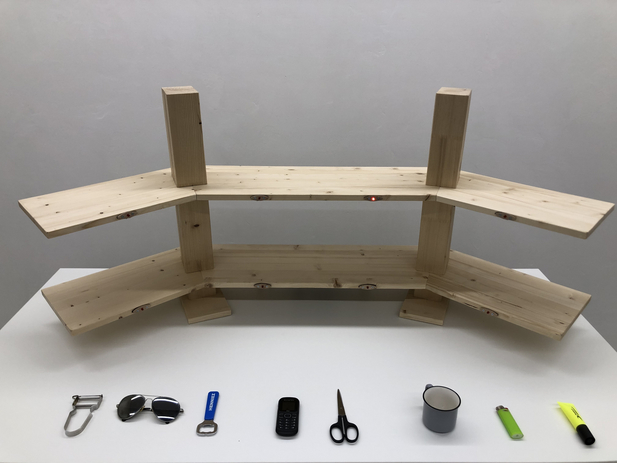
To address these questions, we developed the Shelf Task, a memory paradigm that can be implemented in closely matched physical and virtual environments. Participants interact with objects and later recall what they encountered as well as where the objects were located. This allows us to compare memory across environments while maintaining similar tasks. Our research shows that immersive VR can approximate important aspects of real-world experience, although it does not simply reproduce reality. For example, our comparisons indicate that perceived possibilities for action and similarity to everyday life can be comparable between immersive VR and the physical environment. Memory performance appears to change with experience: initial exposure to an immersive environment may create additional demands, whereas performance can become more similar to real-world performance with repeated exposure.
A longer-term goal of this research line is to move from understanding memory in virtual environments to using virtual environments to support memory. We are developing and testing approaches in which VR-based tasks can be used repeatedly and independently outside the laboratory. This includes investigating the feasibility of self-administered VR memory training and, ultimately, whether such training can strengthen memory.